
PriorX is your trusted IP partner. For Inventors, Entrepreneurs, and Creators, we support those who are shaping the world.
...

What is a Prior Art Search and Why It Matters

Unlocking Innovation Through Informed IP Strategy

Introduction: The Power of Knowing What Came Before

In the world of intellectual property (IP), originality is the cornerstone of innovation. But how can one be certain that an invention is truly novel? The answer lies in the prior art search—a foundational step in the patenting process that evaluates the uniqueness of an invention by comparing it to existing knowledge.

A prior art search helps inventors, IP professionals, and companies assess the patentability of an idea, avoid costly legal disputes, and develop stronger IP strategies. This article explores what a prior art search is, how it works, and why it’s indispensable in today’s competitive innovation landscape.

Understanding Prior Art: More Than Just Old Patents

What Is Prior Art?

“Prior art” refers to any evidence that an invention is already known. It doesn’t have to be in patent form; it can include:

  • Published patents and patent applications
  • Scientific papers and technical journals
  • Books and online publications
  • Public demonstrations, trade shows, or product sales
  • Videos, websites, and social media content

If the information existed before the filing date of a patent application, it’s considered prior art.
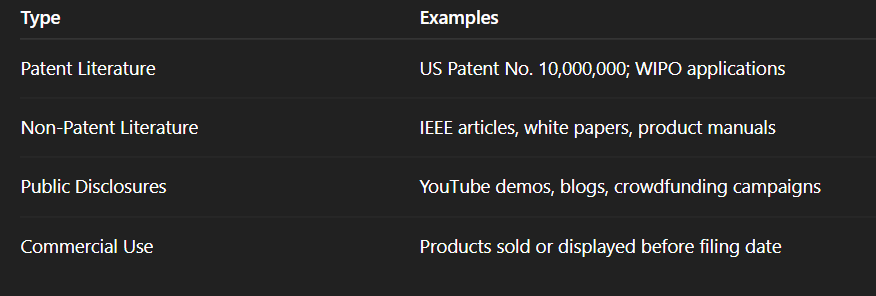
Forms of Prior Art

blog images

Conducting a Prior Art Search: Tools and Techniques

How the Search Works

A prior art search involves systematically exploring databases and information sources to identify documents or products similar to the invention in question.

Steps in the Process

  1. Define the Invention Clearly: Break it down into key components and technical features.
  2. Identify Keywords and Classifications: Use patent classification systems like CPC or IPC, and relevant keywords.
  3. Search Multiple Databases:
    • Patent Databases: USPTO, EPO, WIPO, Google Patents
    • Non-Patent Databases: IEEE Xplore, Google Scholar, arXiv, Amazon
  4. Analyze and Interpret Results: Determine whether the prior art affects the novelty or non-obviousness of the invention.
  5. Document the Findings: Keep a detailed report for legal and strategic purposes.

Tools Commonly Used

  • Professional Platforms: PatBase, Derwent Innovation, Orbit Intelligence
  • Free Resources: Google Patents, Espacenet, USPTO search portal
  • AI-Powered Tools: Use machine learning to match semantic relevance and image recognition

Why Prior Art Searches Are Crucial

Patentability Assessment

A prior art search is often the first indicator of whether an invention can be patented. It helps prevent the filing of weak or unpatentable applications.

Cost and Risk Management

Filing a patent application is expensive. A prior art search ensures that resources are not wasted on ideas that lack novelty or inventiveness.

Competitive Intelligence

Understanding the IP landscape provides insights into competitor activity, technological trends, and white space for innovation.

Litigation Defense and Freedom to Operate

Prior art can shield against infringement lawsuits or support patent invalidation strategies. It’s also vital in ensuring that launching a product won’t violate existing patents.
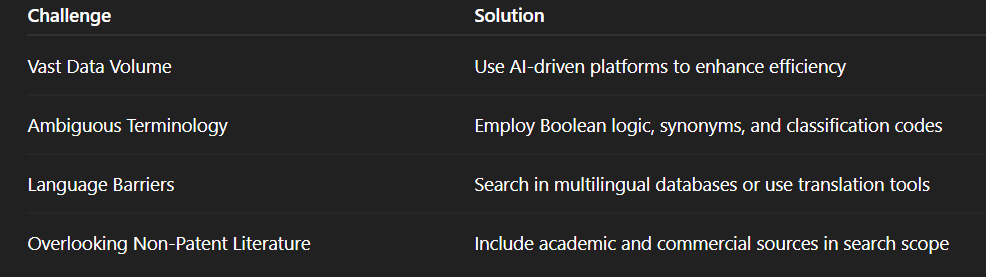
Challenges and How to Overcome Them

blog images

Conclusion: Making Informed Decisions Through Prior Art

A thorough prior art search is not merely a box to check—it’s a strategic necessity in the IP lifecycle. It empowers inventors and businesses to make informed decisions, protect investments, and enhance innovation success rates. In an era where IP is one of the most valuable business assets, understanding what came before is essential to building what comes next.

References

  1. World Intellectual Property Organization (WIPO)
  2. United States Patent and Trademark Office (USPTO)
  3. European Patent Office (Espacenet)
  4. Google Patents
  5. IEEE Xplore Digital Library
  6. World Economic Forum: IP Reports on Innovation (2023)